




Don’t Give the Public a Reason to Doubt You
If you have not noticed, many states and communities are in the middle of what amounts to a taxpayer revolt. People are questioning property taxes, state legislatures are debating major changes to how local government is funded, communities are scrutinizing budgets, and some fire departments are already seeing their funding reduced in the name of taxpayer relief.
This is happening at the same time many fire departments are trying to explain why they need more staffing, new apparatus, additional stations, better training and increased funding. We cannot make those arguments effectively while also handing our critics examples that can be portrayed as waste, entitlement or poor stewardship of public resources.
And this is where perception matters.
In “Fire Department Customer Service,” Alan V. Brunacini wrote, “We must consider how what we are doing looks to others.” I have always thought that was a remarkably simple and useful standard. We spend a lot of time inside our organizations explaining to each other why we do things, but sometimes we need to walk across the street, turn around and look back at ourselves from the perspective of the people who pay the bills.

Consider a couple of examples. What does it look like when fire companies go out of service to attend a four-hour Pilates class? There may be a perfectly reasonable explanation for the activity, and there may even be value in it, but how does it look to a taxpayer who waits longer for an engine because their neighborhood company is unavailable?
Or consider a department that fights publicly for four-person staffing, explaining to elected officials and citizens that four firefighters are essential for safe and effective operations, only to allow the fourth member of a company to leave “off the books” for extended periods routinely. It is pretty difficult to argue that the fourth firefighter is essential when you ask for the money and then treat that same position as optional once the funding has been approved.
Those examples are not really about Pilates or staffing. They are about credibility.
Protecting the reputation of a fire department cannot be something assigned exclusively to the fire chief or the public information officer. Everyone in the organization needs to take ownership of it. A firefighter should be comfortable pulling another firefighter aside and saying, “Hey, think about how this looks.” A company officer should recognize when something that has become completely normal inside the station might look very different to someone outside the organization. Chief officers should be willing to stop practices that may be convenient or popular internally but cannot be reasonably defended externally.
Just as important, leaders need to create an environment where reminding someone about the standard is viewed as protecting the team rather than betraying it. We talk a lot these days about honoring our oath and what that means. I think protecting the reputation of the fire service and the people who work in it should be part of that conversation.
The reality is that when one firefighter behaves badly, the public rarely sees only that individual firefighter. They see the uniform, the apparatus, the badge and the name of the department on the side of the rig. Fair or unfair, one person’s actions can quickly reflect on everyone else who wears that uniform.
Perhaps the most important thing for us to remember is that the fire department does not belong to us. The station is not ours, the engine is not ours, the equipment is not ours, and the money certainly is not ours. It belongs to the community.
The people we serve purchased those resources, maintain them and provide the funding that allows us to perform one of the most important jobs in local government. They have entrusted those resources, and their fire department, to us. Being a good steward means more than simply avoiding obvious misconduct. It means occasionally stopping and asking whether our decisions can be reasonably defended to the people paying the bill.
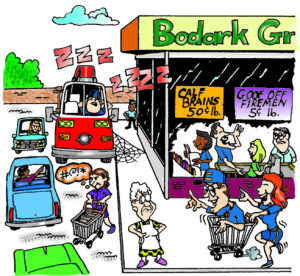
Could I explain what we are doing to a taxpayer? Could I explain it to the city council? Could I explain it to the family whose emergency response might have been delayed? Could I comfortably explain it if a reporter called tomorrow morning and asked about it?
If you find yourself struggling to answer those questions, it might be worth reconsidering what you are doing.
We should never become so comfortable with the public’s support that we begin to believe it is guaranteed. It isn’t. Every call, every interaction with a citizen, and every decision involving public resources either reinforces the organization’s reputation or takes a little away from it.
Generations of firefighters built the reputation we inherited. Our job is to protect it and leave it in good shape for the people who come after us.