




10 Minute-Training: Put Your Fire-Reading Skills to the Test
October 13, 202610-Minute Training: Put Your Fire-Reading Skills to the Test
Initial size-up sets the course for everything that follows. This month’s 10-Minute Training reinforces the importance of reading the fire carefully.
By Ed Hartin
B Shifter Buckslip, Oct. 20, 2026
Every month, the B Shifter Buckslip features a 10-Minute Training scenario designed to provide a bit of synthetic experience while enhancing your ability to recognize patterns, identify relevant cues, expectancies and anomalies, set plausible goals, and develop a workable incident action plan.
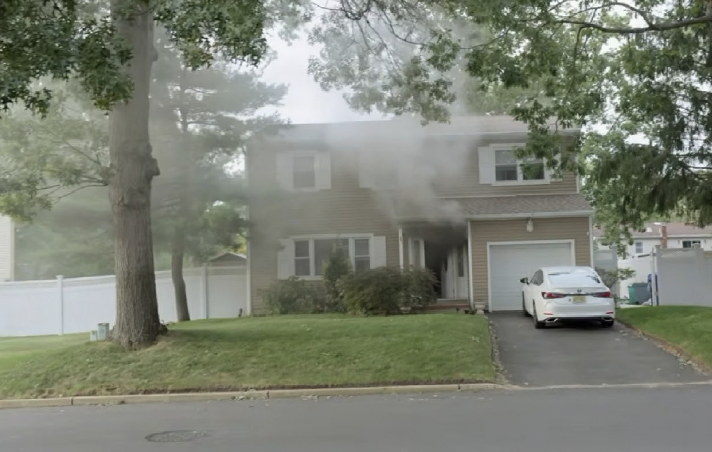
View of the Incident from the Alpha Side: Flames were visible in the kitchen from the front door. Smoke conditions on the Charlie Side are consistent with those on the Alpha Side. The rear door is closed, and windows are intact on Charlie Side.
Note: Adapted from Jersey Shore Fire Response. (2026). Pre arrival 2 alarm structure fire Brick, New Jersey 9/24/26. https://bit.ly/3TCgSSc.
Early growth-stage fires and decay-stage, ventilation-limited fires can look similar, making the differences hard to spot. During the initial size-up, IC No. 1 must read the fire, identify its stage of development, and determine whether it is fuel-limited or ventilation-limited.
This month’s 10-Minute Training for IC No. 2 takes us to Brick Township, New Jersey, where a residential fire has smoke showing from an open front door. Through incident video and additional learning resources, this exercise reinforces the importance of reading the fire to identify its stage of development, Fuel- or ventilation-limited conditions, and likely location. These are critical elements of initial size-up for fire officers and firefighters.
The training also emphasizes the importance of clear, consistent terminology for geographic designations and incident organization. Additional learning materials include a NIOSH report and an IAFF Lessons Learned video examining a fatal incident in Gresham, Oregon, where conditions appeared to indicate an early growth-stage fire, but the actual fire conditions were tragically different.
For other Ten-Minute Trainings, visit htpps://commandcompetence.com.

Ed Hartin retired as fire chief with East County Fire and Rescue in Camas, Wash., after a 50-year fire service career. Ed maintains an active international training and consulting practice and is a Blue Card instructor. He holds the Chief Fire Officer designation from the Commission on Professional Credentialing and is a Fellow of the Institution of Fire Engineers. Ed has undergraduate degrees in fire protection technology and fire service administration and a master’s degree in education. Since 2017, Ed has developed more than 500 10-Minute Trainings to provide ICs with deliberate practice to build competence.