


Does Blue Card Work with SOP-Driven Assignments?

Does Blue Card Work with
SOP-Driven Assignments?
Mixing SOP-based assignments with Blue Card’s critical-factor-based system is a recipe for organizational chaos.

B Shifter Buckslip, Nov. 25, 2025

Fire departments sometimes ask, “How do we blend Blue Card with our existing SOP-based assignment system?”
The short answer: You can’t blend them.

Let’s Understand What Blue Card Is

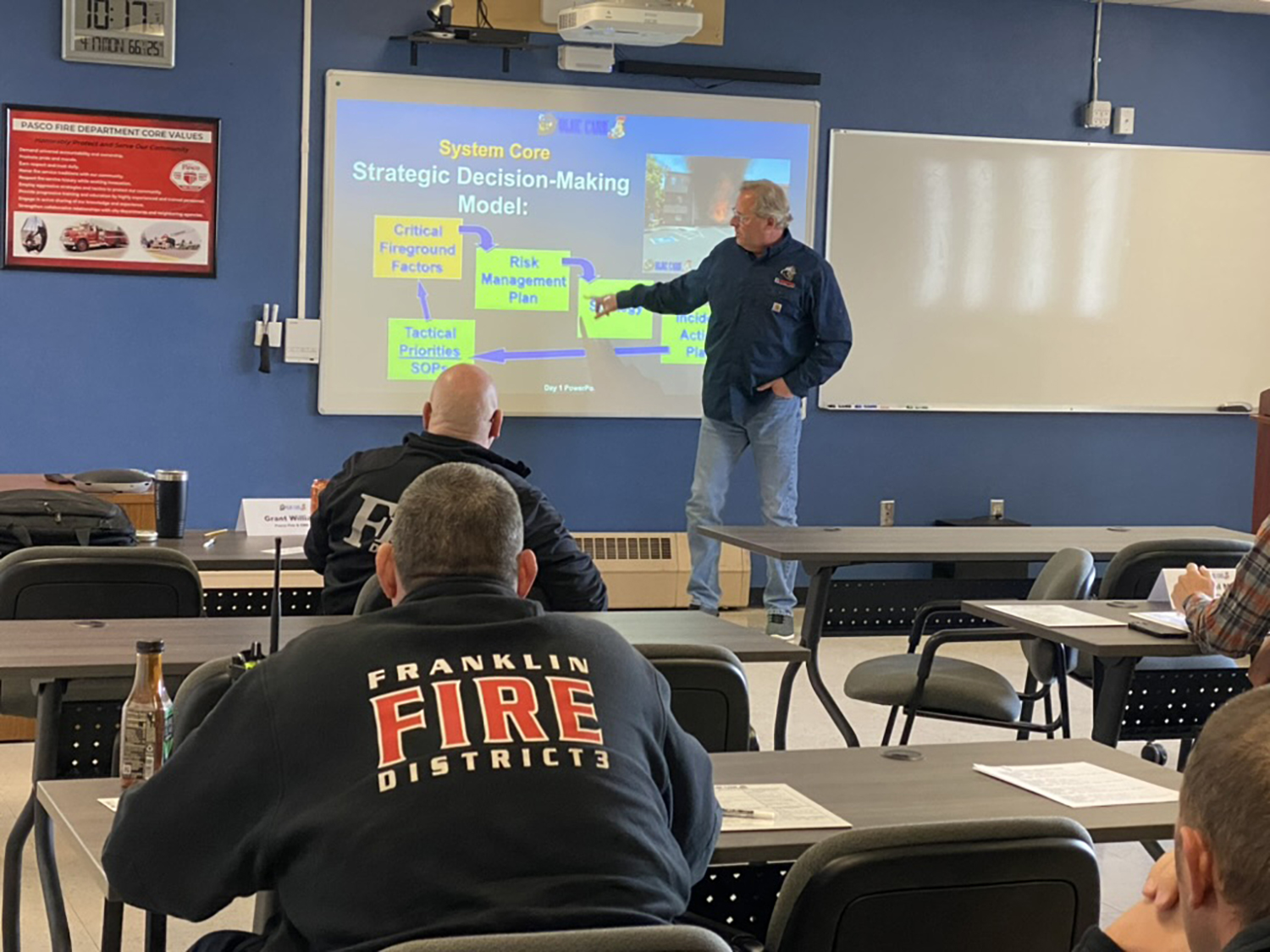
In the Blue Card system, everything starts with understanding what’s really happening on the fireground. We evaluate the incident’s critical factors, identify the actual problem we’re trying to solve, and then look honestly at what might get in our way. From there, the Incident Commander prioritizes assignments based on those factors—fire conditions, life safety, and the building’s size, height, and use. It’s a disciplined approach that keeps us focused on what matters most. And, as always, the IAP must match the capabilities of the resources on scene.

Also, Blue Card certification is built on the professional qualifications of a nationally recognized standard. Once you change those qualifications, it’s no longer Blue Card.

To understand why, we need to examine where assignment-based SOP systems came from, how they shaped fireground operations for decades and how modern communications—and modern fireground hazards—demand a different approach.

Altering Blue Card to fit an SOP-driven system creates a hybrid with none of the benefits of a proven program.

The Origin Story of SOP-Based Assignments

For most of fire service history, we fought fires without radios. Portable radios didn’t reliably enter the fire service until the mid-1960s. For almost 230 years—from Ben Franklin’s first fire company in 1736 through two world wars—incident commanders had only one communication tool: their voice.

Before radios, an IC couldn’t:

  • Give orders until units were physically within earshot.
  • Receive updates from companies operating inside a structure.
  • Recall or redirect deployed units.
  • Broadcast a general announcement.
  • Quickly request additional resources (thus the “chief’s aid” runner sprinting to a pull box).

Without communications, early ICs needed predictable, automatic actions from arriving units. SOP-based run orders—a pre-scripted sequence of assignments based on arrival order and apparatus type—emerged as the solution. It was the only way to create coordination in a world without radios.

Even today, many departments still run a single SOP-based assignment plan for all structure fires—essentially a Plan A that assumes the same building type, same conditions, same order of arrival, every time.

The Problems with SOP-Based Assignments

An assignment-based SOP seems simple. But it creates significant operational risks, many of which align directly with the top NIOSH line-of-duty death (LODD) contributing factors.

1. Lack of Strategic & Tactical Thinking
When every company’s task is pre-defined on paper, officers never develop the higher-level cognitive skills required to size up, plan or adapt. Everything becomes ready–fire–aim.

2. Automatic Offensive Strategy
Most SOPs start every fire offensively, regardless of the building, conditions or risk. That shortcut eliminates true risk management.

3. Poor Early Communications
If the SOP becomes the real IC, fewer units report conditions, understand critical factors and know how they fit into the incident strategy.


4. Freelancing & Accountability Issues
When companies self-deploy based on a pre-written plan, you lose:

  • Early command and control.
  • Clear accountability.
  • Resource tracking.
  • Task/area coverage when reality doesn’t match the template.

5. Breakdown When Arrival Order Changes
If the SOP assumes Engine 1 arrives first, but a truck or rescue shows up instead, the whole system fractures.

6. Rank-Based Communication Barriers
In many SOP-based systems, a lower-ranking officer acting as IC cannot legally give orders to a higher-ranking officer, making deviation nearly impossible.

7. Difficulty Executing Plan B
SOP systems are built around only one way of attacking a fire. When conditions demand something different, responders often lack the training, staging habits and command structure to shift strategy.

8. Group-Level Assignments Inside the Hazard Zone
Assigning a search group or vent group inside the hazard zone disconnects units from their original designators and fragments accountability at all levels. In short, SOP-based assignment systems work only when the fireground matches the SOP exactly. When it doesn’t, things break, and they break hard.
When SOPs Do Work: The Row House Example

A Northeast department once contracted with Blue Card for officer-development training. Over 90 percent of their fires were attached row houses with basements stretching the length of a block. Their SOP-based assignment system looked like this:

  • First engine: Alpha side
  • First truck: Alpha side
  • Second engine: Charlie side, basement report
  • Second truck: Charlie side
  • Third engine: Supply first engine
  • Fourth engine: Supply second engine

For row houses, it worked beautifully. For anything other than row houses, it often produced confusion, gaps and strategic misalignment. That was the lesson: A single SOP cannot safely serve all building types.

FDNY: A Different Model with the Same Lesson

FDNY also uses SOP-based assignments, but with a key difference: They don’t use one SOP—they use dozens, tailored to specific building types and construction classes (Type 1 through Type 5). More importantly, companies operate within specific boroughs and only need to learn the SOPs relevant to their area. They have multiple Plans A. Most departments do not—and cannot—replicate that model.

Why Blue Card Uses Plan B

Phoenix—like many urban departments—has nearly every occupancy type imaginable: hospitals, strip malls, co-ops, high-rises, apartments, warehouses, churches, mansions, mobile homes, theaters and more. No single arrival-order SOP could possibly work for all those hazards.

So Chief Alan Brunacini invented Plan B, a critical-factor-based system that works on every building, every day:

  • IC No. 1 takes command, gives the initial radio report, declares the strategy and begins developing an IAP.
  • IC No. 2 responds directly to the scene.
  • All other units Level 1 or Level 2 stage.
  • The IC assigns companies based on conditions, not arrival order.
  • Assignments include a task, location and objective.
  • Units retain their designators for accountability.
  • The organization expands as needed using sectors/divisions (geographic), not groups (functional) inside an IDLH hazard zone.

    This is the structure behind the Blue Card IC Certification Program and the Eight Functions of Command.

“Buggies & Bugles” Are Outdated

Before radios, chiefs needed to stand in the front yard with a megaphone because it was the only way to command. Once portable radios arrived, Chief Brunacini recognized two things:

  1. The best command position is remote, quiet and stationary.
  2. Radios allow an IC to communicate with every unit from beginning to end.

The modern IC must make strategic decisions, not shout tactical orders. That’s why Blue Card places the IC in a fixed command post inside a climate-controlled vehicle with strong communications, where they can:

  • Maintain a full tactical worksheet.
  • Manage resources.
  • Forecast conditions.
  • Keep the team connected.

This isn’t tradition—it’s functional necessity.

Blue Card Cannot Be Modified to Fit SOP-Based Assignments

Blue Card is built on professional qualifications derived from a national standard—NFPA 1561. Those qualifications define the cognitive skills an IC must demonstrate, the manipulative skills required to manage a hazard zone and the conditions under which the IC certification is valid.

You cannot change those qualifications and still call it Blue Card. If a department rewrites or alters the Blue Card IC standard to make it “fit” their SOP-based system, they are creating a different program—a hybrid with none of the benefits and all the liabilities of a deviation from a standard. If you’re using SOPs to assign units, you’re not using Blue Card.

The Bottom Line

Chief Brunacini spent decades building a modern, evidence-based, communication-driven incident management system—one that handles every building type and every tactical hazard with consistency and scalability. Blue Card is not designed to blend with assignment-based SOPs. It is specifically designed to replace them. If a department adopts Blue Card but keeps trying to use pre-set run orders, the question becomes: Why adopt Blue Card at all?


If you modify the IC professional qualifications, it’s no longer Blue Card.

If you assign units with SOPs instead of critical factors, it’s no longer Blue Card.

If the SOP is acting as the IC, it’s not Blue Card.

Blue Card works when you actually use Blue Card.