



DO NOT POST. Author Review Draft. Write It Down: You Should Document Every Fire
June 8, 2026Write It Down: You Should Document Every Fire.
Without proper mental hygiene, our memories become nothing but a series of blank spots & dark holes.
By Johnny Peters
B Shifter Buckslip, June 9, 2026
“I wish I’d done it.”
When you hear these words, heed them. In this particular case, they were spoken by Chief Hooker. He was my chief when I came to 46’s as a rookie at the end of the previous century. What he wished he’d done was write down something about every fire he’d made. He told me I should start one. A notebook. A physical record of each fire. For myself, but also for my family. I would want to remember, one day, and I wouldn’t, he warned me. Not all of them. But how could I forget any of these moments? The fires I was making were carved deeply in my mind. Solid memories of excitement, fear, triumph. It seemed impossible to forget.
But I did forget.
Problem is, most fires follow a routine. Routine endangers long-term recollection. Chief Hooker laid out a simple process for me—and this was before the internet had almost entirely eroded our attention spans. The man was prescient. But at the time, it seemed I wouldn’t forget. How could I? The fires I was making were carved deep. Who could forget these events? So I didn’t start the notebook.
I didn’t ignore him entirely. I took pictures. But this was back when we took pictures with cameras. Cell phones didn’t have cameras. And they were the province of stock traders and drug dealers, not rookie firefighters. Pictures are worth a thousand words, but given enough time, those words can become “I have no memory of this,” repeated many times over.
I know because there are several photos of burned houses from my first few weeks in the department (I pretty quickly abandoned carrying a camera with me) that fail to jog my memory. Moments pass and fall under our feet, breaking down and mixing together. They lose their form; they decay. We can look back and find ourselves surrounded by a wilderness of experiences, with no signposts to mark our way.
Under those conditions, we’re apt to go in any direction.
The Cavities of Recall
Growing up, I don’t recall finishing even one tube of toothpaste. It’s not a memorable event, but the sheer number of used-up tubes should lend some familiarity. I should, when throwing away a finished tube, be able to say, “Ah, I remember this from my childhood.” Not out loud, necessarily. But I don’t. When I cast myself back to childhood, I recall no such feeling.
This is not true of mowing, for instance. I’ve been mowing lawns since the mid-1980s. My first mower was a push version with a cylinder of spinning blades. Entirely human-powered, it sounds like the wind sharpening knives when you push it. Mowing lawns takes longer than tossing something in the trash. It makes a stronger impression than a tube of toothpaste, used up or not. It makes sense that it would be more firmly seated in my psyche.
I remember a short period when squeeze tubes faced competition from dispensers that delivered toothpaste by simply pressing a button. The button would open a tiny toothpaste gate, and the paste would issue forth, as if by magic.
When I saw the commercials, I had to have this new delivery method.
There were no batteries. Perhaps it relied on atmospheric pressure, like drafting. This might mean those at higher altitudes never had this as an option. If someone reading this lives in Denver and is over the age of 50, please write in and tell us whether you have ever seen this sort of dental maintenance technology. I could look it up, but internet searches are strangling the romance of knowledge. My Neanderthal DNA craves human transmission without digital middlemen involved. A handwritten letter would be preferable. If you send an SASE, we will reward you with a collectible 1×1” square of the shirt Nick Brunacini wore on his last day with the PFD. Did you know that the Phoenix Fire Department earns a tidy sum from the lifejacket industry thanks to registration of that acronym? Not many people do.
Anyway, I clearly remember this alternate delivery method. I can recall the image of the base plate in the cylinder rising as the toothpaste was depleted just as well as I can remember the pitiful way the standard tubes would curl as we drained them. The squeeze tubes have proven to be more resilient. Cost of production, perhaps. The canisters have disappeared, at least so far as I know.
Can I recall throwing one of those magic toothpaste dispensers away? I can imagine opening the gate and getting no toothpaste. I can hear it striking the blue plastic trash can we had in the bathroom, with its terrifying crust of unknown material at the bottom. But this memory has the faint scent of manufacture. A result of lifelong experience. An extrapolation. But that is what it means to remember: To reattach yourself to the past.
Reunited But Not Restored
Have you had any part of your body reattached? I have. A tendon I popped off the end of my left ring finger while working on the ambulance shore power at the station. The surgery was delayed due to an incorrect initial diagnosis and the vicissitudes of bureaucracy, allowing some necrotization.
My left ring finger doesn’t quite work the same anymore. (I had to look that up. I don’t wear rings. Not even a wedding ring. Recall what I said about the death of romance?) Things change while they are separated. When reunited, both parts are different to each other. So it goes with things remembered. It takes work to recall events properly.
So, Chief Hooker told me to write down something about every fire, and I did not. And now there’s an emptiness. A darkness. I know something is back there. I know something happened, but I can’t recall what it was. It’s lost to me. If I could break into the underground NFIRS bunker in Roswell and successfully navigate their labyrinthine halls while evading the formidable security patrols, perhaps I could recover the records. I could recall the events from the narrative portions. Reconstruct my early fires even if imperfectly. It would be a risky operation—and expensive. I think the days when I can maneuver past a lattice of motion-detecting lasers and outrun trained guard dogs are gone, so those fires are as lost to me as the discarded tubes of toothpaste. It’s a gap. An empty space. Write things down, and write down the truth. Do it quickly, while it is still fresh. The longer you wait, the poorer the connection will be.
What I’m saying is that cavities are preventable.
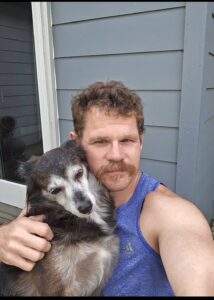
Johnny Peters has been with the Houston Fire Department since last century. In this time, he has successfully gamed the system and was promoted to senior captain, forever freeing himself of the burden of fire hose by hiding in a truck company.